
Key Takeaways
- The right office drinking water solution depends on your budget, office size, water usage, and long-term priorities.
- Tap water is inexpensive and readily available, but taste and quality can vary depending on local water treatment and building plumbing.
- Traditional water jugs provide filtered drinking water but require ongoing deliveries, storage space, and regular bottle replacements.
- Bottleless water dispensers connect directly to your water supply and provide filtered water without the need for bottles or deliveries.
- For many businesses, bottleless water dispensers offer the best balance of convenience, water quality, and predictable long-term costs.
Every Office Needs Drinking Water. The Question Is How to Provide It.
Most workplaces don’t spend much time thinking about drinking water until something stops working.
The last bottle empties before the afternoon rush. Someone forgets to schedule the next delivery. Employees avoid drinking the tap water because they don’t like the taste. Suddenly, a simple workplace amenity turns into another task that someone has to manage.
Providing clean drinking water is a small part of running an office, but it affects employees and visitors every day. The right solution should be reliable, easy to maintain, and fit comfortably within your budget.
If you’re deciding between tap water, traditional bottled water jugs, and a bottleless water cooler, here’s what to consider before making your choice.

Option 1: Tap Water
For many businesses, the office sink is the simplest way to provide drinking water. Municipal water systems throughout the United States are regulated and treated to meet federal and state safety standards, making tap water a practical option for everyday use.
However, “safe to drink” doesn’t always mean employees enjoy drinking it.
Water can vary in taste depending on local treatment methods, mineral content, or even the plumbing inside an older building.
Pros
- Lowest upfront cost
- No equipment to purchase or maintain
- Unlimited water supply
- No deliveries or storage requirements
Cons
- Taste can vary significantly from one location to another
- Chlorine, minerals, or sediment may affect flavor
- Older plumbing can influence water quality before it reaches the faucet
- No chilled or hot water without additional equipment
- Employees may choose bottled beverages instead if they dislike the taste
For very small offices with minimal water consumption, tap water may be all that’s needed. For larger workplaces, however, convenience and employee preferences often become more important.

Option 2: Traditional Water Jugs
For decades, bottled water coolers have been the standard office solution.
These systems use large five-gallon bottles that are delivered on a scheduled basis and placed on top of a dispenser. They provide drinking water without relying directly on the building’s tap water.
Many businesses appreciate the improved taste over untreated tap water, but bottled systems also entail ongoing responsibilities.
Pros
- Consistent drinking water quality
- Cold water readily available
- Familiar and easy to use
- Minimal installation required
Cons
- Ongoing delivery costs
- Heavy bottles that must be lifted and replaced
- Storage space required for full and empty bottles
- Risk of running out before the next delivery
- Plastic bottles require transportation and handling
- Monthly costs continue as water consumption increases
As an office grows, bottled water often becomes less convenient. Someone still needs to monitor inventory, schedule deliveries, replace bottles, and make space for storage.
Option 3: Bottleless Water Coolers
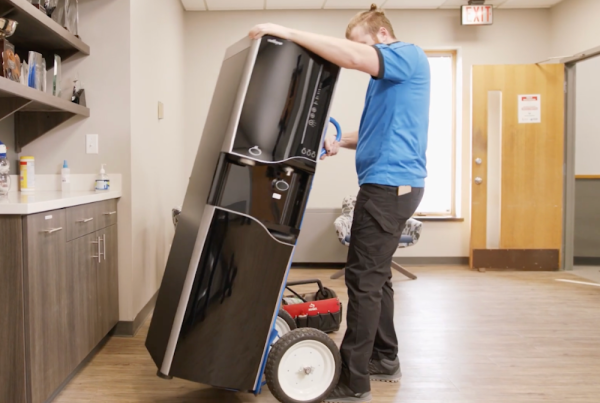
Bottleless water coolers connect directly to your building’s existing water supply.
Instead of relying on bottled deliveries, the water passes through multiple stages of filtration before being dispensed. Depending on the system, this may include carbon filtration, reverse osmosis, UV purification, or other treatment technologies designed to improve taste and reduce contaminants.
The result is filtered drinking water that’s always available without managing bottles.
Pros
- Unlimited supply of filtered water
- No bottled water deliveries
- Excellent tasting water
- No heavy lifting or bottle changes
- Minimal storage requirements
- Reduced plastic waste
- Predictable monthly operating costs
- Available with hot, cold, sparkling, or ice options depending on the model
Cons
- Professional installation is required
- Filters need periodic replacement
- The system remains in one location once installed
For most businesses, these aren’t significant drawbacks because installation, scheduled maintenance, and filter replacements are typically included as part of the service agreement.
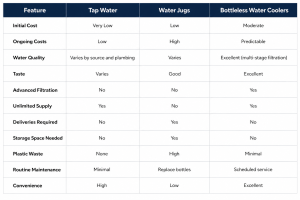
Comparing Your Options
What Should Your Business Consider?
Every office is different, so the best solution depends on more than price alone.
Office Size
A small office with only a few employees may not consume enough water to justify a larger system.
As staff numbers grow, however, bottled water can quickly become difficult to manage. Higher water usage means more deliveries, more bottle changes, and more storage space.
Bottleless systems are often easier to scale because they don’t depend on bottle inventory.
Water Consumption
Think about how often employees fill reusable bottles, make coffee, or grab a glass of water throughout the day.
If your office regularly goes through several five-gallon bottles each week, it’s worth comparing those recurring delivery costs with a bottleless system.
Many businesses are surprised by how much they spend over the course of a year on bottled water service.
Employee Experience
Access to clean, great-tasting drinking water is a simple workplace benefit that employees notice.
When water tastes better and is always available, people are more likely to stay hydrated throughout the workday. Visitors also appreciate having access to filtered cold water without waiting for someone to replace an empty bottle.
It’s a small improvement that contributes to a better workplace experience.
Sustainability
Many organizations are looking for practical ways to reduce waste.
Bottleless water dispensers eliminate the need to transport, store, and replace large plastic water bottles. While reusable five-gallon bottles are refilled many times before being recycled, bottleless systems can still reduce transportation, handling, and the resources associated with bottled water delivery.
For businesses working toward sustainability goals, that’s another factor worth considering.
Long-Term Costs
The purchase price of a water cooler only tells part of the story.
It’s also important to consider ongoing expenses such as bottled water deliveries, employee time spent managing inventory, storage requirements, and equipment maintenance.
A solution with a higher upfront investment may cost less over several years if it reduces recurring operating expenses.
Looking at total cost of ownership often provides a clearer picture than comparing monthly invoices alone.
Which Office Water Solution Is Best?
There’s no single answer for every business.
Tap water is a practical choice for very small offices where convenience and taste aren’t major concerns.
Traditional water jugs work well for locations without plumbing access or businesses that need a temporary solution.
Bottleless water coolers are often the best fit for growing organizations that want reliable access to filtered drinking water without managing deliveries or storing bottles.
The right decision ultimately comes down to how your employees use the system and what matters most to your organization.
Frequently Asked Questions
Is tap water safe for office employees?
In most communities, municipal tap water is treated to meet federal and state drinking water standards. However, factors such as mineral content, chlorine levels, and building plumbing can affect taste and overall drinking experience. Many businesses choose additional filtration to improve water quality and consistency.
How often do bottleless water dispenser filters need to be replaced?
Filter replacement schedules vary depending on the system, water quality, and usage. Most providers include routine maintenance and filter changes as part of their service program to help keep the system operating properly.
Are bottleless water dispensers less expensive than bottled water service?
For many businesses, they are. While installation represents an initial investment, eliminating recurring bottle deliveries, storage requirements, and ongoing water purchases often makes bottleless systems more economical over time.
Find the Right Water Solution for Your Workplace
Choosing an office water system isn’t simply about providing drinking water. It’s about selecting a solution that fits the way your workplace operates today while supporting future growth.
Whether you’re considering your first office water dispenser or looking to replace bottled water deliveries, Pure Water WNY can help you compare your options and recommend a system that fits your space, budget, and water usage.
Contact Pure Water WNY today to learn more about bottleless water dispensers and discover a simpler way to provide clean, great-tasting water throughout your workplace.
About Us
Pure Water of Western and Central New York has proudly served over 1,000 customers with high-quality water and ice purification systems since 2008. As a locally owned, family-run business, we take pride in building lasting relationships with the communities we serve. Our commitment to clean, great-tasting water and outstanding service has earned us national recognition, including multiple awards from Wellsys for top-tier performance.
As a certified MWBE (Minority and Women Owned Business Enterprise) and a supporter of Cradle Beach (an organization dedicated to providing memorable experiences for children with disabilities and special needs), we’re passionate about promoting inclusion, giving back to our community, and delivering environmentally responsible solutions that make a difference every day.